
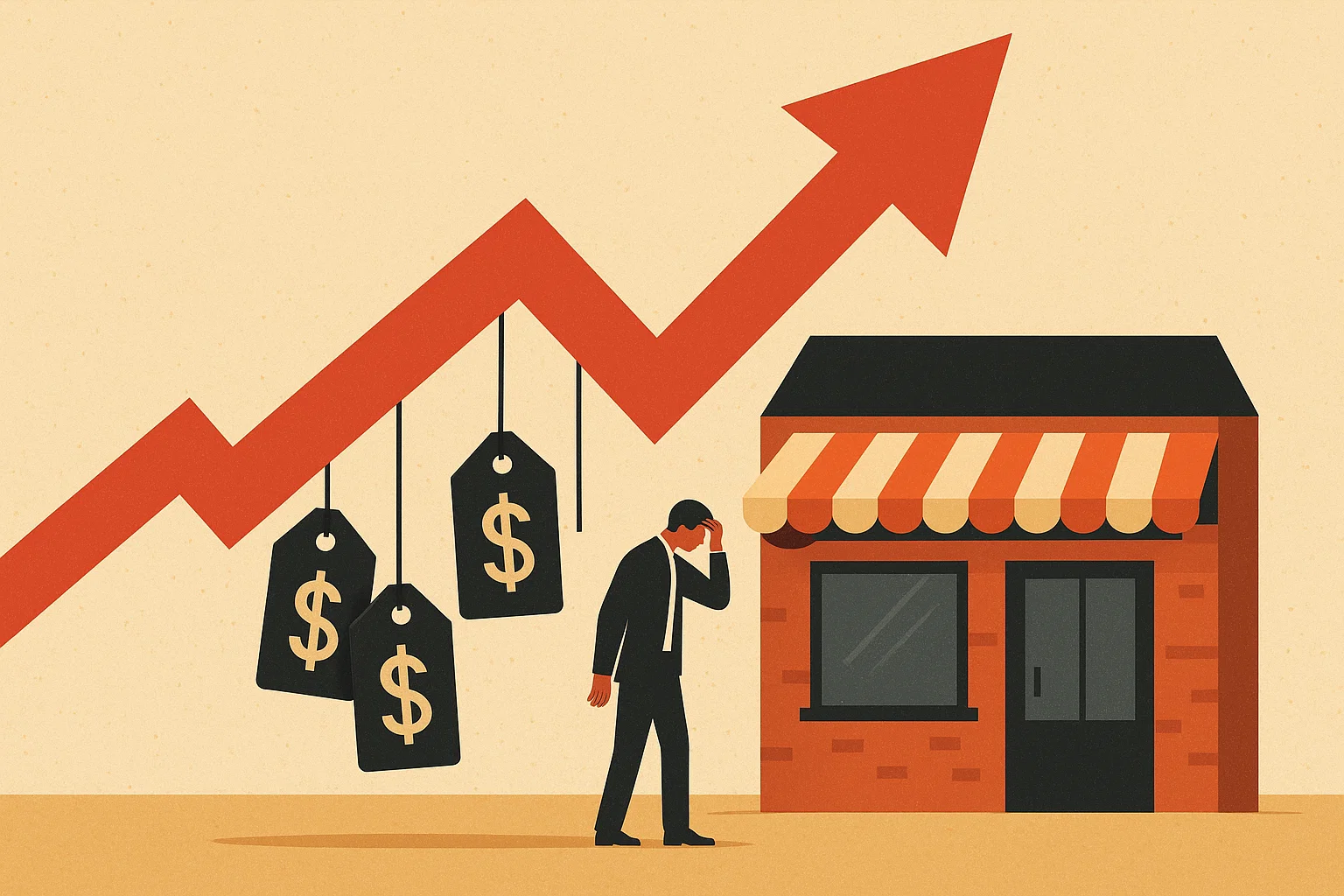
Inflation affects everyone, but its impact on small businesses can be especially severe. When prices rise, large corporations often have the resources to absorb higher costs, while smaller enterprises must make difficult trade-offs to survive. The hidden cost of inflation for small businesses lies not only in higher expenses but also in the slower erosion of stability, competitiveness, and long-term growth.
The Strain of Rising Operational Costs
Inflation touches every corner of business operations — from rent and raw materials to logistics and wages. For small companies, each increase hits harder because their margins are already thin. Suppliers adjust prices quickly, but customers don’t always accept the same pace of change. That lag between paying more and earning more can quickly create cash flow gaps.
The hidden cost of inflation for small businesses often appears in overlooked areas. For instance, delivery fees, packaging, and even energy bills quietly rise, turning monthly budgets into moving targets. Owners who once planned months ahead now struggle to predict expenses week by week. It’s not just about paying more; it’s about losing the ability to plan with confidence.
The Pressure on Workforce and Productivity
When inflation rises, so do employee expectations. Workers face their own higher living costs and demand wage increases to keep up. While fair pay is essential, many small businesses simply can’t raise salaries fast enough without cutting elsewhere. This creates a delicate balance between retaining talent and maintaining profitability.
The real challenge is psychological as much as financial. Uncertainty breeds stress, both for owners and employees. A distracted or anxious team works less efficiently, leading to lower productivity and a weaker sense of motivation. Over time, this emotional fatigue becomes part of the hidden cost of inflation for small businesses, affecting output and morale even after prices stabilize.
Shrinking Competitiveness and Market Flexibility
In a competitive market, small businesses rely on flexibility — their ability to adapt faster than big corporations. But inflation limits that agility. When costs rise unpredictably, it becomes harder to offer competitive pricing or invest in marketing and innovation. Many businesses are forced to raise prices simply to survive, even if that means losing customers to larger competitors who can afford temporary losses.
Moreover, access to credit often becomes more expensive. Interest rates rise alongside inflation, making loans less attractive and expansion plans riskier. This leads to a cycle where small enterprises postpone investments, fall behind technologically, and gradually lose their position in the market. These are consequences that don’t make headlines but quietly define the future of local economies.
The Long-Term Erosion of Stability
Inflation doesn’t just change numbers on invoices; it alters the entire rhythm of a business. When every decision revolves around managing costs, creativity and long-term vision fade. Owners become reactive instead of strategic, focused on surviving the next quarter rather than building for the next decade.
The hidden cost of inflation for small businesses is the loss of momentum — the subtle decline of ambition replaced by constant adaptation. While many firms endure these challenges, they often do so at the expense of innovation and confidence. Recovery is possible, but it requires time, stability, and trust in markets that no longer feel predictable.
Conclusion
Inflation reveals the fragility of small enterprises in ways that statistics can’t fully capture. The hidden cost of inflation for small businesses is found in their lost flexibility, weakened morale, and fading capacity to grow. While numbers may eventually stabilize, rebuilding the sense of security and optimism that fuels entrepreneurship takes much longer. For small businesses, survival through inflation is not just a financial challenge — it’s a test of endurance, resilience, and belief in the future.