
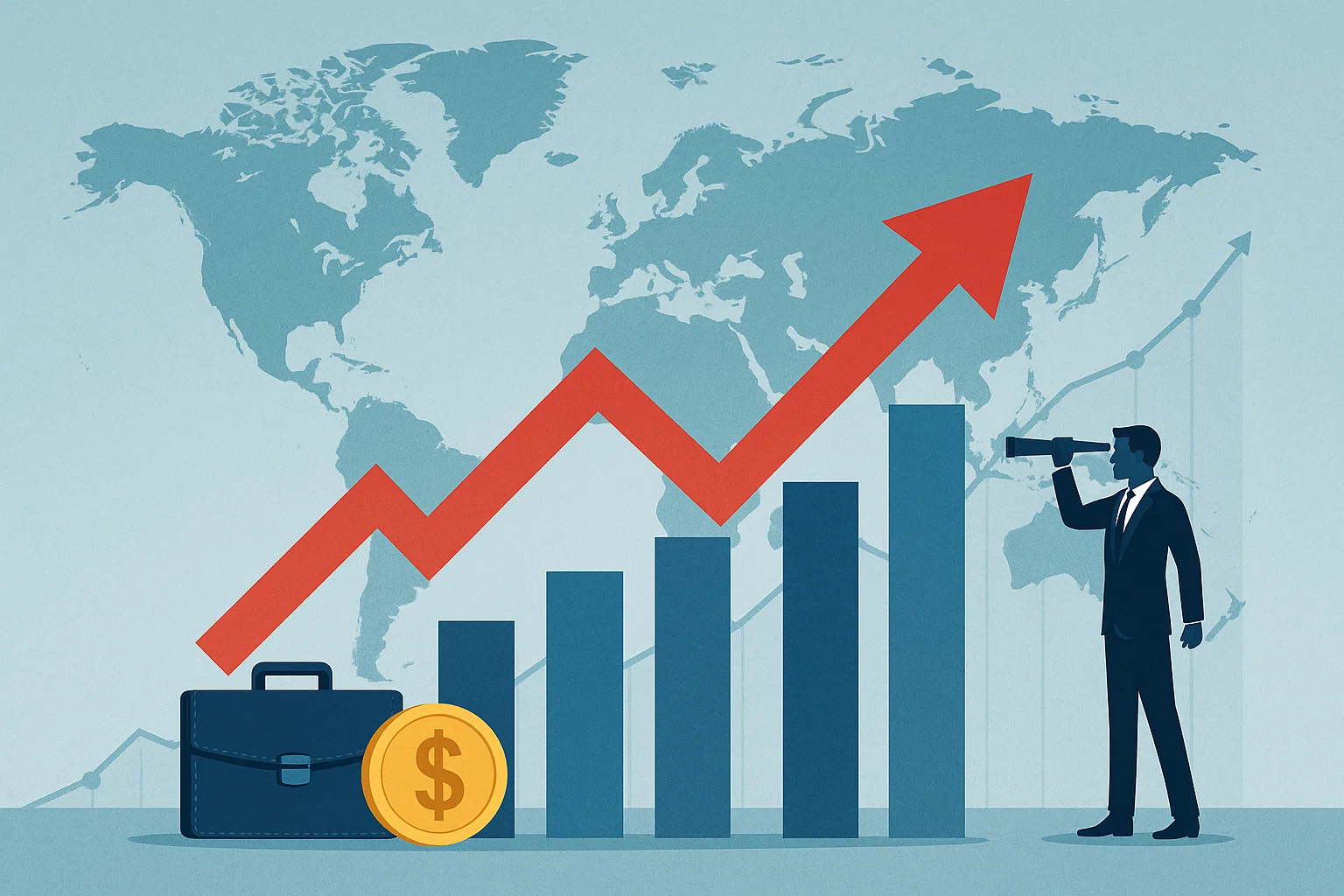
The world economy is entering a period of transformation as it heads toward 2026. Shifts in energy policy, technology, and population growth are reshaping how nations produce, trade, and consume. Understanding these patterns is key to navigating uncertainty and preparing for what lies ahead. The economic forecast 2026 points to a future defined by innovation, sustainability, and resilience — but also by new challenges that will test global cooperation.
Slower Growth but Greater Stability
After years of uneven recovery, global expansion is expected to stabilize by 2026. Inflation pressures that dominated much of the early decade are easing as supply chains normalize and energy prices find balance. However, this moderation comes with slower growth in some regions. Advanced economies may experience limited output increases, while emerging markets continue to drive momentum through industrial modernization and domestic consumption.
The economic forecast 2026 suggests that the global GDP will grow modestly, led by Asia and parts of Africa. Investment in infrastructure, renewable energy, and digital technology remains central to sustaining progress. Countries that adapt quickly to new trade patterns and diversify production are more likely to benefit from this steady but cautious expansion.
The Role of Technology in Productivity
Technological innovation continues to redefine how economies operate. Artificial intelligence, automation, and data-driven systems are transforming industries from logistics to healthcare. These advancements improve efficiency but also create disparities between nations with advanced digital infrastructure and those still developing it. Bridging that divide will determine how evenly growth is distributed.
Automation may reduce labor demand in some sectors but increase opportunities in others, particularly in tech development, green manufacturing, and energy management. Governments and businesses that invest in digital education and workforce retraining will find themselves better positioned in the new global landscape. As the economic forecast 2026 emphasizes, productivity gains will depend on how well societies integrate human talent with technological progress.
Energy Transition and Climate Policy
Sustainability is becoming a defining factor in economic planning. The push toward renewable energy is accelerating as nations aim to reduce carbon dependency and secure energy independence. While this shift creates short-term volatility — particularly in fossil fuel markets — it also opens pathways for innovation and long-term growth.
Countries investing heavily in wind, solar, and hydrogen technologies are expected to see steady returns by 2026. Climate-related industries, from sustainable construction to electric transport, are gaining ground. However, the transition also exposes structural weaknesses in economies that rely heavily on oil exports. Managing this transformation will require careful balance between environmental responsibility and economic stability.
Trade, Geopolitics, and Emerging Economies
Global trade is adapting to a more fragmented world. Supply chain disruptions of recent years have led nations to prioritize regional partnerships and self-sufficiency. This trend reduces vulnerability but may limit cross-border efficiency. Emerging economies are taking advantage of this shift by expanding local manufacturing and strengthening regional trade blocs.
The economic forecast 2026 highlights that countries capable of maintaining diplomatic balance — especially in Asia-Pacific and Latin America — will benefit from diversified trade relationships. Meanwhile, ongoing geopolitical tensions continue to influence commodity markets and investment flows. The challenge for global policymakers lies in encouraging cooperation while managing competition among major powers.
Conclusion
As 2026 approaches, the global economy stands at a crossroads between transformation and uncertainty. The economic forecast 2026 reflects cautious optimism: moderate growth, stronger technology integration, and an accelerated shift toward sustainability. Yet the outcomes will depend on how nations adapt to change, manage inequality, and build resilient systems for the future. Growth in the coming years won’t simply rely on numbers — it will depend on how well humanity balances innovation, stability, and shared progress.