- What Happens When Growth Moves Faster Than Control
 At first, it feels like momentum. Things are expanding, decisions are happening quicker, numbers are going in the right direction. Only later does it become clear what what happens when growth moves faster than control actually looks like from the inside. It Feels Like Progress — Until It Doesn’t Growth rarely announces itself as a… Read more: What Happens When Growth Moves Faster Than Control
 - How People Misjudge Risk When Money Is Involved
 It doesn’t stay abstract for long. The moment real stakes appear, how people misjudge risk when money is involved becomes less about numbers and more about perception — what feels safe, what feels urgent, what feels worth it. It Stops Being About Logic At a distance, risk looks clean. You compare probabilities, outcomes, scenarios. There’s… Read more: How People Misjudge Risk When Money Is Involved
 - Why Stability in Business Can Be More Fragile Than It Looks
 It can look solid from the outside — steady numbers, predictable activity, no obvious disruptions. But why stability in business can be more fragile than it looks usually becomes clear only when something small shifts and the whole structure reacts more than expected. It Feels Stable Because Nothing Is Moving Too Fast At first, stability… Read more: Why Stability in Business Can Be More Fragile Than It Looks
 - The Subtle Signs That a Business Is Taking on Too Much Risk
 It rarely announces itself directly. More often, the subtle signs that a business is taking on too much risk show up in small shifts — things that don’t seem urgent on their own but start to change how decisions feel. It Stops Feeling Like Risk At some point, what used to feel like a stretch… Read more: The Subtle Signs That a Business Is Taking on Too Much Risk
 - How Uncertainty Shapes Every Financial Choice We Make
 You don’t always see it clearly, but it’s there in almost every choice. The moment you try to decide what to do next, how uncertainty shapes every financial choice we make starts to show — not as something obvious, but as a quiet pressure behind the reasoning. It’s Not About What You Know — It’s… Read more: How Uncertainty Shapes Every Financial Choice We Make
 - Why Short-Term Thinking Often Leads to Long-Term Problems
 It rarely feels like a mistake in the moment. Decisions that solve something quickly often look reasonable, even necessary — and that’s exactly where why short-term thinking often leads to long-term problems starts to become visible, though not immediately. The Comfort of Immediate Relief There’s something very convincing about solving a problem fast. A deadline… Read more: Why Short-Term Thinking Often Leads to Long-Term Problems
 - What Makes Some Investments Feel Safe — Even When They’re Not
 At first glance, everything seems fine. Numbers look stable, the story sounds convincing, and somehow what makes some investments feel safe — even when they’re not rarely shows up as a clear warning. It’s more like a feeling you don’t question. Familiarity Disguises Risk There’s a certain calm that comes from recognizing something. An investment… Read more: What Makes Some Investments Feel Safe — Even When They’re Not
 - How Small Business Decisions Quietly Turn Into Big Losses
 It rarely begins with anything dramatic. A minor adjustment, a quick decision, something that seems practical in the moment — and that’s usually how how small business decisions quietly turn into big losses starts to unfold, almost unnoticed at first. The Decisions That Feel Too Minor to Track Not every choice feels important enough to… Read more: How Small Business Decisions Quietly Turn Into Big Losses
 - Why Financial Risks Rarely Feel Obvious at First
 Most financial risk doesn’t arrive looking dangerous. That’s exactly why why financial risks rarely feel obvious at first becomes easier to understand only after something has already shifted. In the moment, things usually seem manageable, explainable, even reasonable. It Usually Looks Like Opportunity First Risk rarely introduces itself as a warning. More often, it shows… Read more: Why Financial Risks Rarely Feel Obvious at First
 - Navigating Financial Risks in a Volatile Global Market
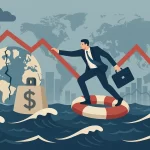 The global economy is more interconnected than ever, which means uncertainty spreads faster too. Investors, companies, and individuals face challenges that can shift overnight — from political changes to natural disasters and financial crises. Understanding how to identify, evaluate, and manage these risks is essential for long-term stability in a world that’s anything but predictable.… Read more: Navigating Financial Risks in a Volatile Global Market
 - The Psychology of Investment: How Emotions Shape Financial Decisions
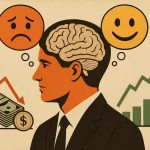 Investing may seem like a rational process based on data, strategy, and analysis, yet emotion plays a much larger role than most people realize. Market trends are not driven by logic alone; they’re shaped by the collective behavior of millions of individuals responding to fear, hope, and uncertainty. Understanding investor psychology helps explain why even… Read more: The Psychology of Investment: How Emotions Shape Financial Decisions
 - Economic Forecast 2026: Trends Shaping Global Growth
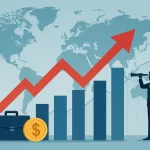 The world economy is entering a period of transformation as it heads toward 2026. Shifts in energy policy, technology, and population growth are reshaping how nations produce, trade, and consume. Understanding these patterns is key to navigating uncertainty and preparing for what lies ahead. The economic forecast 2026 points to a future defined by innovation,… Read more: Economic Forecast 2026: Trends Shaping Global Growth
 - The Hidden Cost of Inflation for Small Businesses
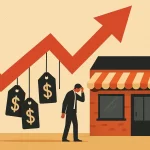 Inflation affects everyone, but its impact on small businesses can be especially severe. When prices rise, large corporations often have the resources to absorb higher costs, while smaller enterprises must make difficult trade-offs to survive. The hidden cost of inflation for small businesses lies not only in higher expenses but also in the slower erosion… Read more: The Hidden Cost of Inflation for Small Businesses
 - Risk Management Strategies Every Entrepreneur Should Know
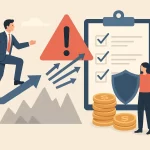 Running a business is a constant exercise in balancing opportunity and risk. Every decision — from hiring and pricing to expanding into new markets — carries a level of uncertainty. The ability to anticipate and prepare for potential setbacks often determines whether a company thrives or struggles. Understanding risk management strategies every entrepreneur should know… Read more: Risk Management Strategies Every Entrepreneur Should Know
 - How Digital Currencies Are Changing the Economic Landscape
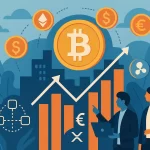 In just over a decade, digital currencies have evolved from a niche experiment to a global financial phenomenon. Governments, institutions, and individuals are now recognizing their influence on trade, investment, and innovation. The rise of blockchain-based assets is transforming how money moves and how economies function. Understanding how digital currencies are changing the economic landscape… Read more: How Digital Currencies Are Changing the Economic Landscape
 - Understanding Business Cycles: From Boom to Recession
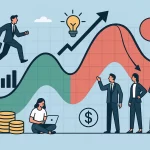 The economy moves in patterns — periods of expansion, slowdown, and recovery. These fluctuations, known as business cycles, shape everything from employment to investment and consumer confidence. Understanding business cycles from boom to recession helps people and companies make better financial decisions and plan for the future with greater stability. The Nature of Economic Expansion… Read more: Understanding Business Cycles: From Boom to Recession
 - The Role of Artificial Intelligence in Modern Finance
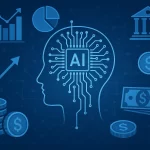 Technology has always influenced the world of finance, but artificial intelligence is transforming it in unprecedented ways. From data analysis and fraud detection to automated investing and risk management, AI is redefining how financial systems operate. Understanding the role of artificial intelligence in modern finance reveals how this technology is shaping both opportunity and responsibility… Read more: The Role of Artificial Intelligence in Modern Finance
 - Corporate Debt: A Growing Challenge for Global Economies
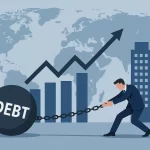 In recent years, the scale of corporate borrowing has reached record highs, sparking concern among economists and policymakers alike. What once fueled growth and innovation is now becoming a source of vulnerability for global markets. Understanding corporate debt as a growing challenge for global economies is crucial for recognizing the balance between financial expansion and… Read more: Corporate Debt: A Growing Challenge for Global Economies
 - Building Resilient Portfolios in Times of Economic Uncertainty
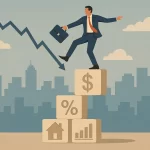 Market turbulence is an inevitable part of investing. Periods of growth are often followed by downturns, leaving investors searching for stability and security. The ability to create strategies that can withstand shifting conditions has become essential in today’s volatile environment. Understanding building resilient portfolios in times of economic uncertainty helps investors focus on adaptability rather… Read more: Building Resilient Portfolios in Times of Economic Uncertainty
 - The Future of Global Risk: A View from Davos 2017Originally published in Scientiifc American – January 16, 2017– Thirteen years ago, a group of us joined forces at the invitation of the World Economic Forum to embark on what would become an enlightening, yet sobering, journey in the risk space: the Global Risks Report initiative. The Forum is most known to the general public for its… Read more: The Future of Global Risk: A View from Davos 2017
- World Economic Forum’s 2016 Global Risks Report discussed at DavosThe report, undertaken for the past 11 years with the Wharton Risk Management Center, relates opinions of 750 experts who assessed 29 global risks for both impact and likelihood over a 10-year time horizon and is being released today in advance of the Forum’s annual meeting taking place on January 20-24 in Davos, Switzerland. The… Read more: World Economic Forum’s 2016 Global Risks Report discussed at Davos
- LEADERSHIP DISPATCHES—New Book Released! (2015)Imagine you are the newly elected president of your country, waiting to enter office. Just ten days before your inauguration, your country suffers a massive 8.8 earthquake. How do you prepare for the recovery process? How do you bring your country back on track rapidly? On February 27, 2010, Chile was rocked by a violent… Read more: LEADERSHIP DISPATCHES—New Book Released! (2015)
- EMK receives the prestigious Lloyd’s Science of Risk Prize in London (Nov 2014)The award recognizes his work on Evaluating Flood Resilience Strategies for Coastal Megacities (published earlier this year in Science), jointly undertaken with Jeroen Aerts, Wouter Botzen, Hans de Moel (VU University, Amsterdam), Kerry Emanuel (MIT) and Ning Lin (Princeton University). In the work, Dr. Michel-Kerjan and his colleagues performed a full cost-benefit analysis of resilience… Read more: EMK receives the prestigious Lloyd’s Science of Risk Prize in London (Nov 2014)
- How Terror-Proof Is Your Economy? (Nature, October 2014)In a recent Nature article (Nature has the highest impact factor of any journals in the world), Dr. Michel-Kerjan calls for a much more rigourous quantitative analysis of terrorism exposure to help any President or Prime Minister make more informed decision. “As aircraft from the United States and other nations continue to bomb parts of the self-proclaimed… Read more: How Terror-Proof Is Your Economy? (Nature, October 2014)
- Erwann Michel-Kerjan becomes a regular contributor to BloombergBusinessweek (August 2014)Starting September, Dr. Erwann Michel-Kerjan will collaborate on a quarterly basis with BloombergBusinessweek on a series of editorials related to risk taking and financial protection.
- New in Science – Evaluating Flood Resilience for Costal Mega-Cities (May 2014)Just published in Science. — “Recent flood disasters around the world illustrate how vulnerable coastal cities are to storm surge flooding. Despite trillions of dollars of assets located in coastal flood-prone areas, investments in protection have often been inadequate ( 8), postponed for short-term economic reasons, for lack of consensus on how to properly evaluate the… Read more: New in Science – Evaluating Flood Resilience for Costal Mega-Cities (May 2014)
- Dr. Erwann Michel-Kerjan is appointed Executive Director of the Wharton Business School’s Risk Management Center (Dec 2013)Dr. Michel-Kerjan was appointed to this new position in December 2013, after 7 years as the Managing Director of the Wharton Risk Center. More information about the Wharton Risk Center’s activities at http://www.wharton.upenn.edu/riskcenter/
- Federal Reverve – New York – Nov 1. Managing the Risk of CatastrophesThe Federal Reserve Bank of New York organizes a timely conference on Friday November 1 on Managing the Risk of Catastrophes: Protecting Critical Infrastructure in Urban Areas.
- Testimony before the US Congress (September 2013)EMK was asked to testify today before the US Senate (Banking Committee) on the future of the terrorism risk insurance program that provides $100 billion of coverage to corporations doing business in America.
