
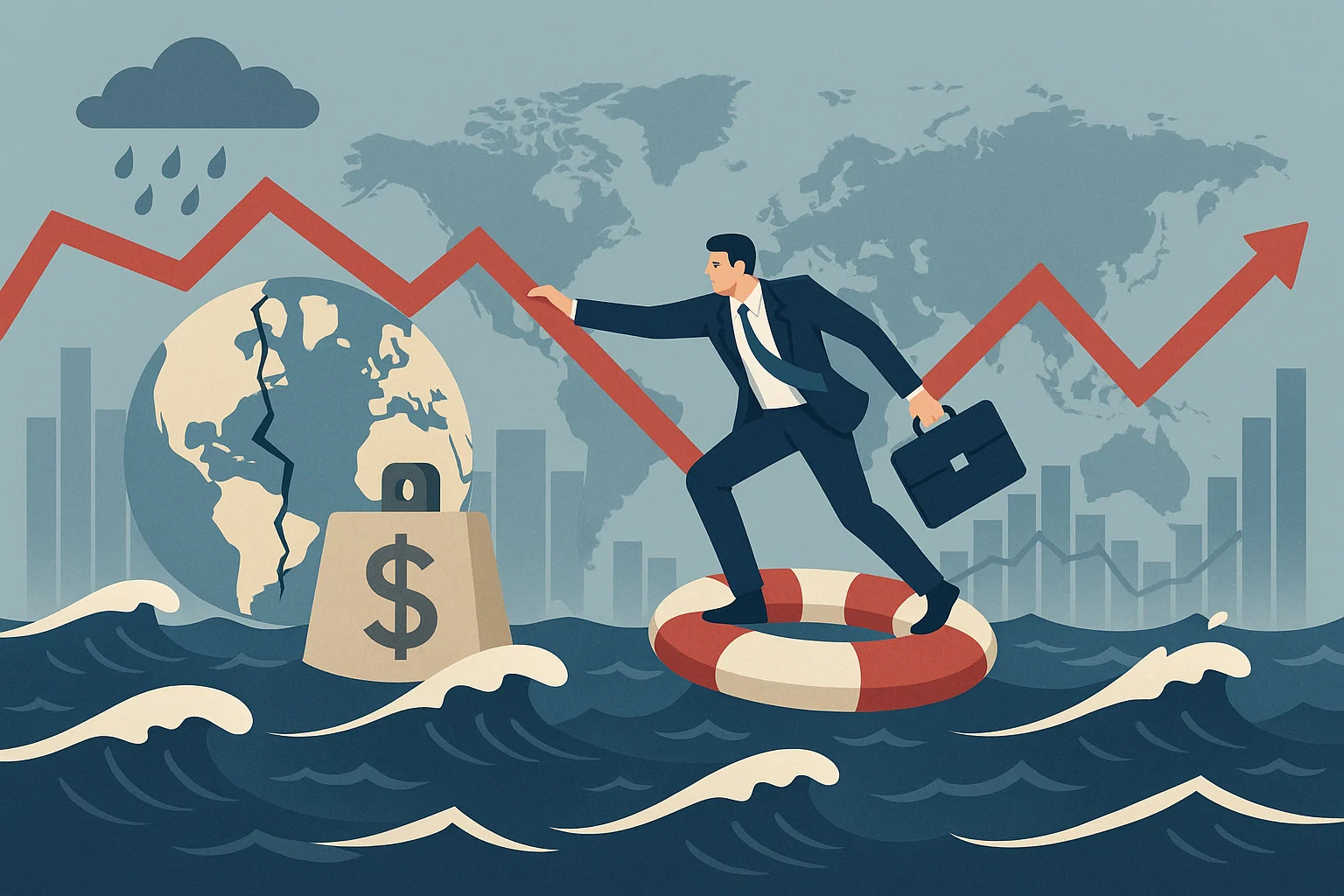
The global economy is more interconnected than ever, which means uncertainty spreads faster too. Investors, companies, and individuals face challenges that can shift overnight — from political changes to natural disasters and financial crises. Understanding how to identify, evaluate, and manage these risks is essential for long-term stability in a world that’s anything but predictable.
The Nature of Financial Risk
Financial risk comes in many forms, and it rarely appears the same way twice. Market volatility, inflation, currency fluctuations, and interest rate changes are just a few of the factors that influence the value of investments and assets. What makes them so complex is that they often overlap — a sudden political event in one country can affect trade balances or stock prices across the globe.
In such an environment, recognizing the interconnection of global economies becomes vital. A crisis in energy prices might impact transportation, manufacturing, and even consumer confidence. Therefore, managing financial risk isn’t only about reacting to numbers but also understanding how world events, social shifts, and technology combine to shape the markets.
The Role of Diversification
One of the most effective strategies to reduce exposure to financial uncertainty is diversification. Instead of relying on a single investment or market, spreading resources across multiple asset classes and regions can protect portfolios from unexpected shocks. A balanced approach that includes both stable and high-growth opportunities allows investors to absorb market swings without severe loss.
However, diversification isn’t just about holding many different assets. It’s about finding investments that behave differently under pressure. When one market dips, another may rise, creating balance. For businesses, this principle applies to supply chains, partnerships, and revenue sources — reducing dependence on a single customer, country, or industry.
Understanding Emerging Risks
Modern finance operates in an age where traditional risks meet new ones. Cybersecurity threats, digital currencies, and climate change are reshaping how institutions and investors think about risk management. A data breach can cause millions in losses, and environmental disasters can disrupt industries overnight. The pace of technological development adds complexity but also creates tools to predict and respond to challenges more effectively.
Financial models now include data from global news, social sentiment, and AI-driven analysis to assess potential crises earlier. The ability to adapt quickly to emerging risks separates those who survive from those who fail when markets turn volatile. The key is not just anticipating change, but preparing for it continuously.
Human Factors in Decision-Making
Despite sophisticated algorithms and forecasts, human behavior remains one of the most unpredictable elements in finance. Fear, optimism, and herd mentality drive markets as much as fundamentals do. When uncertainty rises, emotional decision-making often replaces logical analysis. Recognizing this tendency and developing discipline in strategy helps investors and managers maintain a steady course even in turbulent times.
Learning from past downturns — whether it’s the 2008 financial crisis or the 2020 pandemic shock — teaches that preparation and patience are more powerful than panic. Sustainable financial growth comes from balancing calculated risk with adaptability and awareness of the human side of economics.
Conclusion
Financial stability in a volatile global market depends on understanding both the science and psychology of risk. Economic turbulence is inevitable, but its effects don’t have to be catastrophic. By maintaining awareness, diversifying investments, and adapting to emerging trends, individuals and organizations can navigate uncertainty with confidence. Managing financial risks is not about predicting the future — it’s about being ready for it.