
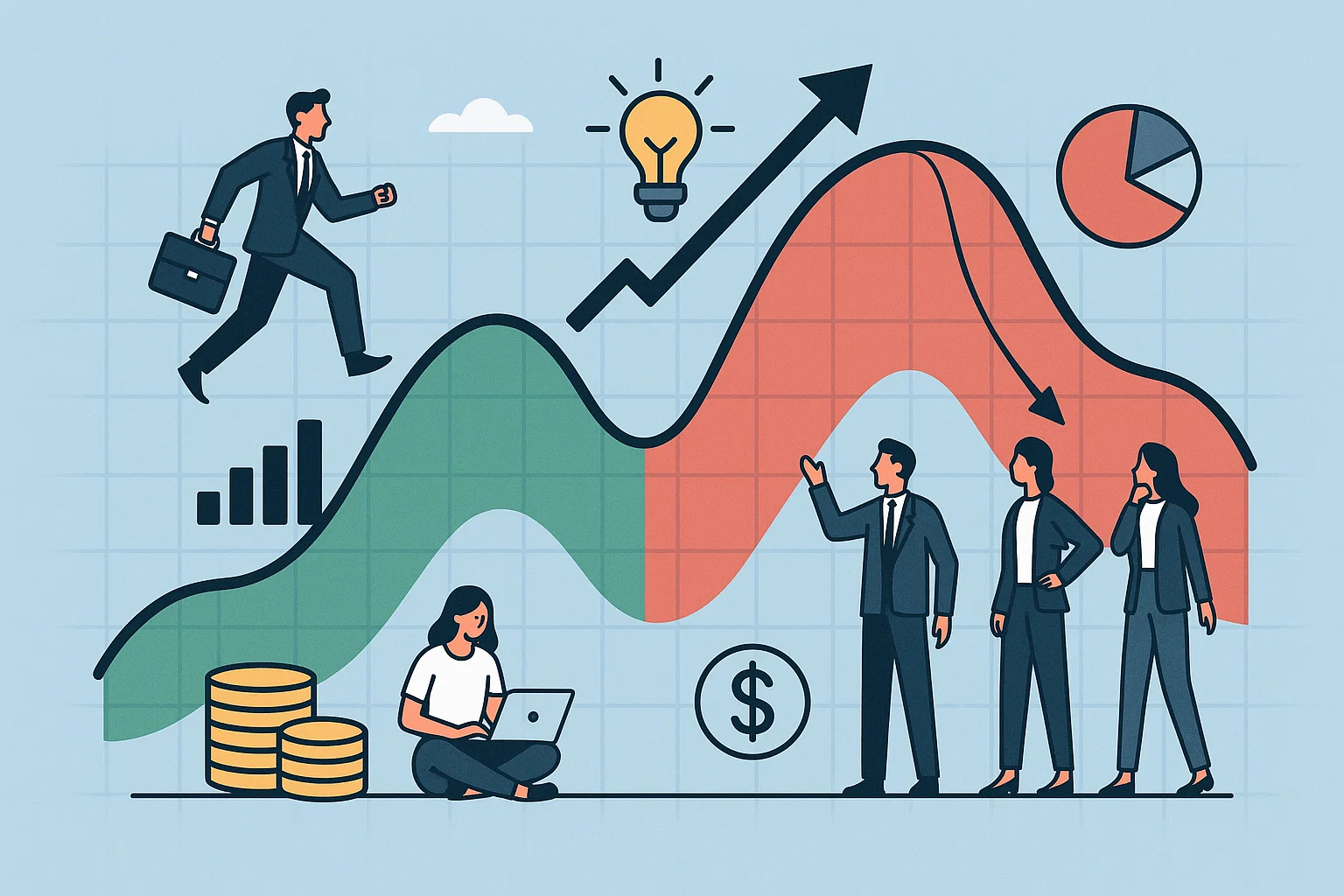
The economy moves in patterns — periods of expansion, slowdown, and recovery. These fluctuations, known as business cycles, shape everything from employment to investment and consumer confidence. Understanding business cycles from boom to recession helps people and companies make better financial decisions and plan for the future with greater stability.
The Nature of Economic Expansion
Every cycle begins with growth. In this phase, optimism drives business investment, job creation, and higher consumer spending. Low interest rates often encourage borrowing, while innovations and global demand fuel productivity. This expansion stage can last for years, creating a sense of prosperity that feels almost permanent.
Yet, as growth continues, inflationary pressures build. Prices rise, credit becomes more expensive, and central banks begin tightening monetary policy. These changes don’t immediately end the boom but gradually slow its pace. The momentum of confidence keeps activity high, even as the first signs of imbalance appear. Recognizing this transition early is one of the key insights into business cycles from boom to recession.
The Turning Point and the Onset of Recession
Eventually, every boom reaches a peak — the moment when growth becomes unsustainable. Costs rise faster than profits, demand levels off, and speculation leads to overvaluation in markets. When confidence finally cracks, businesses reduce production, investments shrink, and unemployment begins to climb. This marks the downturn, or recession phase, of the cycle.
A recession doesn’t necessarily mean collapse; it’s a natural corrective process. Economic activity contracts as inefficiencies are cleared out, allowing room for future stability. The severity depends on factors like debt levels, consumer resilience, and government response. Some downturns are brief and mild, while others, driven by structural issues or global shocks, can reshape economies for years.
Recovery and Renewal
After contraction comes renewal. Lower interest rates, new policies, and improving sentiment spark gradual recovery. Consumers start spending again, companies rebuild inventories, and innovation reawakens investment. While early recovery feels fragile, it lays the foundation for the next growth cycle.
The rhythm of recovery reveals how deeply interconnected economies are. Global cooperation, trade, and technology help accelerate improvement across borders. The patterns may repeat, but each cycle carries lessons that influence the next. This dynamic nature is what makes business cycles from boom to recession both predictable and unique.
The Human Element Behind the Numbers
At its core, the business cycle reflects human behavior — confidence, fear, and adaptation. Booms grow on optimism, and recessions deepen when uncertainty dominates. Policymakers, investors, and entrepreneurs all respond not just to data, but to perception. This psychological dimension explains why forecasting remains so complex.
Learning to observe beyond headlines helps individuals navigate uncertainty. Understanding where the economy stands in its cycle enables smarter financial decisions, whether it’s saving during growth or investing during recovery. The more people grasp the human patterns behind economic shifts, the better prepared they are for what comes next.
Conclusion
Every economy moves through expansion, peak, recession, and recovery — an ongoing rhythm that defines global progress. By studying business cycles from boom to recession, we see that growth and contraction are not opposites but partners in long-term development. Awareness of these shifts helps businesses, investors, and citizens act with foresight rather than fear. The cycle never truly ends; it simply evolves — teaching new lessons each time it turns.