
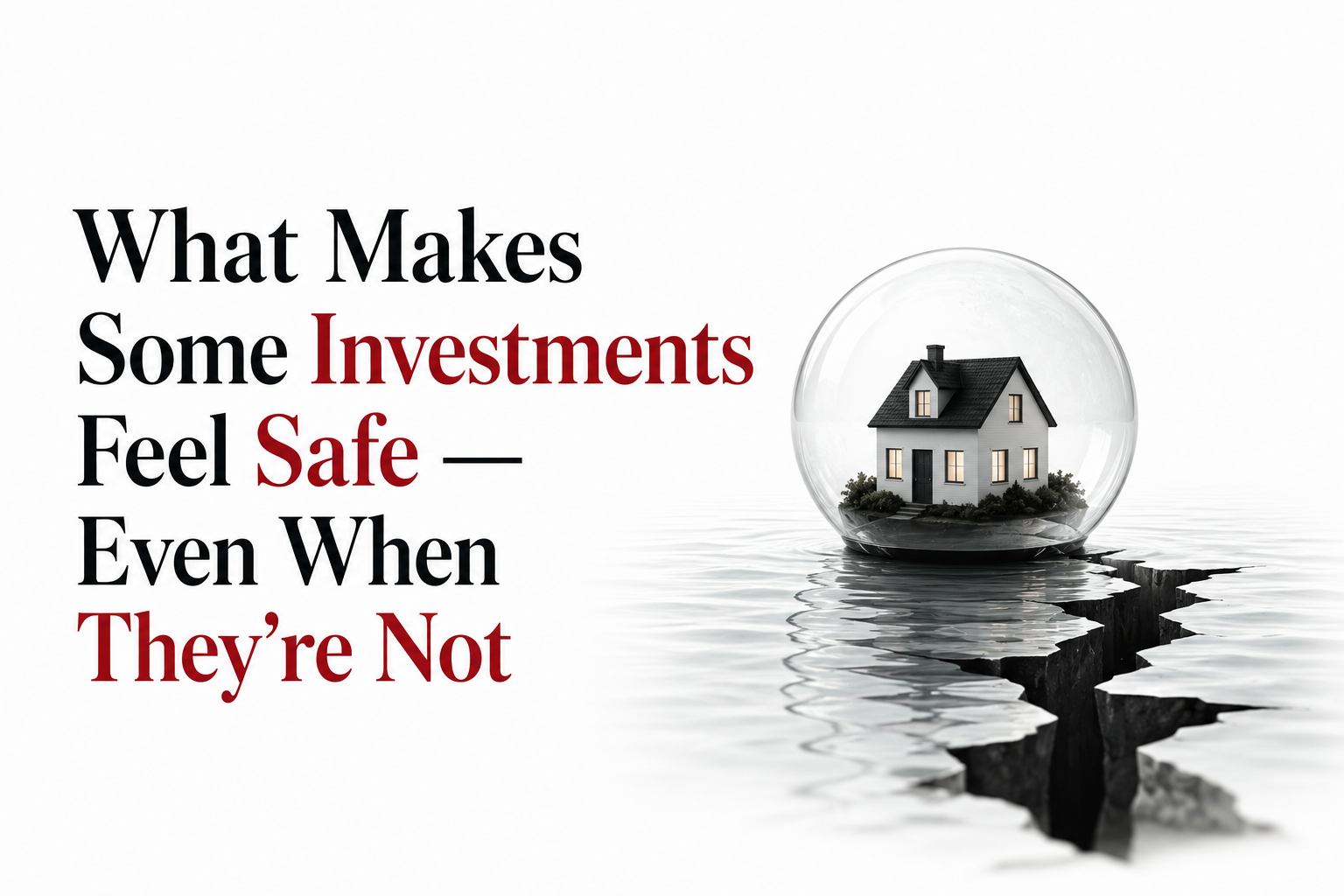
At first glance, everything seems fine. Numbers look stable, the story sounds convincing, and somehow what makes some investments feel safe — even when they’re not rarely shows up as a clear warning. It’s more like a feeling you don’t question.
Familiarity Disguises Risk
There’s a certain calm that comes from recognizing something.
An investment tied to a known brand, a familiar industry, or even just a concept you’ve heard about before tends to feel easier to trust. Not because it’s been analyzed deeply, but because it doesn’t feel foreign.
That difference matters more than most people expect.
Unfamiliar options trigger caution almost automatically. Familiar ones don’t. They slide past that internal filter. And once that happens, the sense of risk softens without anything actually changing underneath.
It’s not logic doing the work there. It’s recognition.
Stability That Comes From the Surface
Some things look stable simply because they don’t move much.
A price that barely changes, steady returns over a short period, predictable patterns — all of it creates a sense of control. You feel like you understand what’s happening, even if the underlying reasons remain unclear.
But surface stability isn’t the same as real stability.
It can come from lack of activity, from delayed reactions, or from structures that haven’t been tested yet. The absence of visible change becomes a signal, even though it doesn’t necessarily mean anything has been resolved.
That’s where the illusion starts to build.
When the Story Sounds Too Complete
There are investments that come with explanations that feel… finished.
Everything fits together neatly. The logic flows. The outcome seems almost inevitable when described in that way. And because the story is coherent, it becomes convincing.
In those moments, doubt doesn’t disappear — it just has nowhere obvious to attach itself.
You’re not ignoring risk. You simply don’t see where it would come from. The explanation already accounted for everything you thought to question.
And that’s exactly why it feels safe.
Experience That Lowers Guard
A past success changes perception in subtle ways.
If something worked before — or something similar did — the next decision feels less uncertain. You rely on that memory, often without realizing how much weight it carries.
It doesn’t need to be a perfect comparison. Even a loose connection is enough.
You start to expect a similar outcome, or at least a similar level of control. The initial caution fades faster. The questions become fewer.
Over time, a few repeated patterns tend to reinforce that feeling:
- outcomes that matched expectations before
- environments that seem consistent
- decisions that didn’t require major corrections
None of these guarantee anything. But they shift how risk is perceived.
The Moment When It Feels Too Quiet
Sometimes the strongest signal isn’t what’s happening, but what isn’t.
No sudden changes. No visible pressure. No reason to react.
That quiet can feel reassuring. Almost like confirmation that things are under control. But in some cases, it simply means nothing has forced a reaction yet.
And without that pressure, it’s easy to assume stability instead of questioning it.
The absence of tension becomes a kind of answer.
It’s Rarely About One Factor
If you try to isolate the reason something feels safe, it’s difficult.
It’s not just familiarity, or stability, or past experience. It’s how they combine. Small signals reinforcing each other, creating a sense of certainty that doesn’t come from one clear source.
That’s why what makes some investments feel safe — even when they’re not is hard to point at directly.
It doesn’t announce itself.
It builds quietly, layer by layer, until the feeling of safety becomes the default — long before the actual risk has had a chance to show itself.