
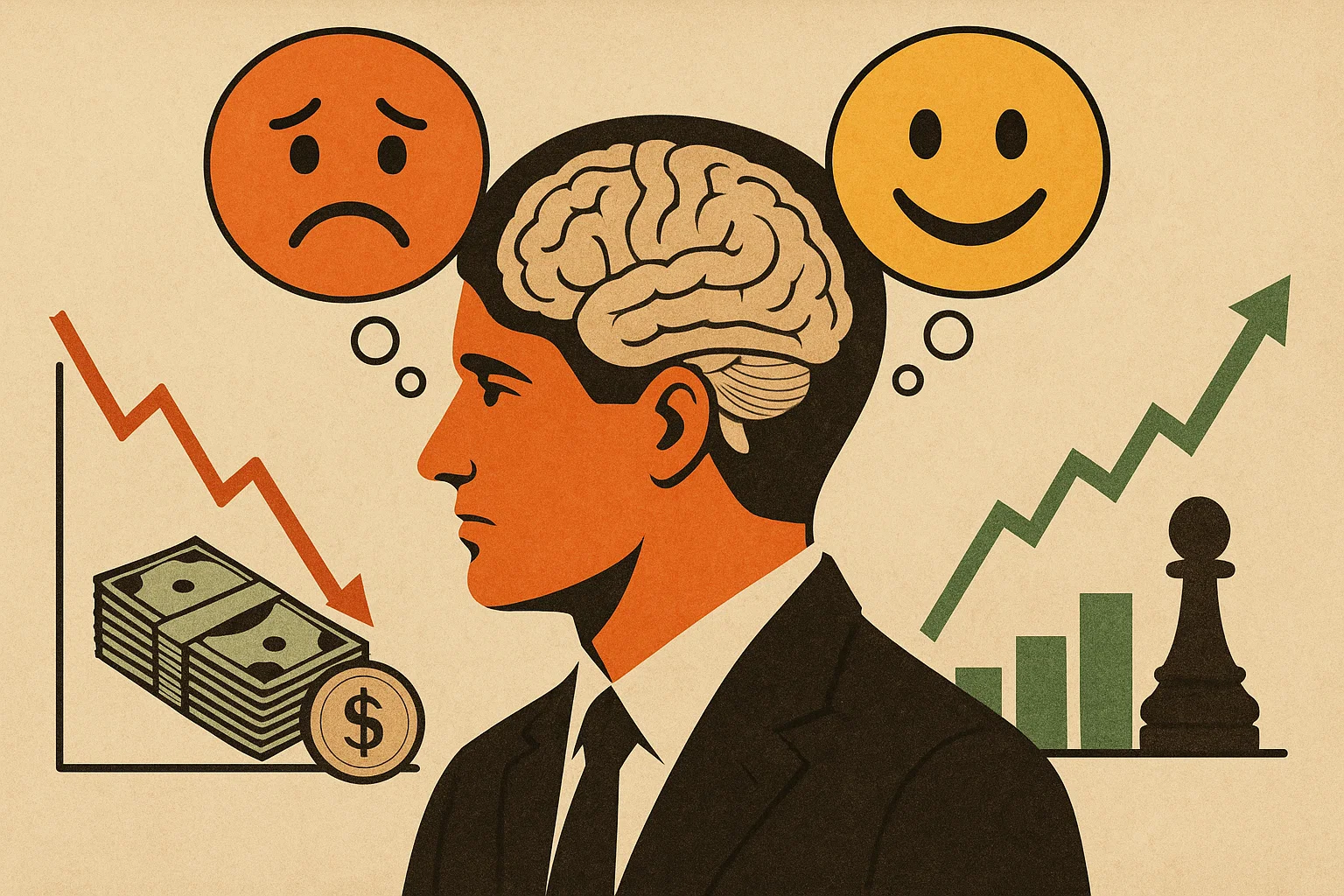
Investing may seem like a rational process based on data, strategy, and analysis, yet emotion plays a much larger role than most people realize. Market trends are not driven by logic alone; they’re shaped by the collective behavior of millions of individuals responding to fear, hope, and uncertainty. Understanding investor psychology helps explain why even the most experienced traders can make impulsive moves when markets shift unexpectedly.
The Emotional Side of Risk
Every investment involves risk, but how people perceive that risk differs widely. Two investors can see the same market data and react in completely opposite ways. One might view a downturn as a buying opportunity, while the other panics and sells everything. This happens because our brains are wired to avoid loss more than they seek gain — a principle known as loss aversion.
During volatile periods, emotions tend to override logic. News headlines, social media, and rumors amplify fear, pushing investors to act quickly rather than strategically. The ability to recognize these emotional triggers can make a crucial difference between a decision made under pressure and one grounded in long-term perspective. Awareness doesn’t remove fear entirely, but it allows investors to pause before reacting.
The Power of Greed and Optimism
Just as fear drives sell-offs, optimism fuels market bubbles. When prices rise consistently, confidence can turn into overconfidence. People start believing they can’t lose, ignoring the underlying risks. This emotional cycle often leads to inflated asset prices and a sudden crash when reality sets in. The history of markets — from the dot-com boom to the crypto surges — is filled with examples of investor psychology driving unsustainable growth.
Greed is not inherently bad; it’s a natural motivator for ambition and success. But in the context of investing, unchecked optimism clouds judgment. A rational investor recognizes that markets move in cycles — and that excitement during a bull run should be balanced with the discipline to anticipate downturns. Emotional control becomes the foundation of financial resilience.
How Biases Influence Decisions
Beyond fear and greed, subtle psychological biases shape every investment decision. Confirmation bias makes people seek information that supports their existing beliefs, while ignoring data that challenges them. Herd behavior leads individuals to follow the crowd, assuming others know better. Recency bias causes investors to overvalue recent events, assuming the future will mirror the present.
These patterns are not signs of weakness; they’re deeply human tendencies. The key is learning to notice them before they influence critical choices. Some investors use journaling or predefined rules to create distance between emotion and action — for example, deciding in advance when to buy or sell rather than reacting in the moment. This approach creates a sense of discipline that helps separate short-term noise from long-term value.
Building Emotional Awareness in Investing
Managing money successfully requires not only analytical skill but also emotional intelligence. Recognizing the feelings that accompany gains and losses allows investors to respond thoughtfully rather than impulsively. Instead of asking, “What should I do now?”, emotionally aware investors ask, “Why do I feel the urge to act?”
Calm decision-making doesn’t mean avoiding emotion; it means using it wisely. Excitement can drive curiosity, while fear can prompt caution. The goal is balance — accepting that emotions will always be part of investing, but ensuring they serve as signals rather than commands.
Conclusion
The markets will always fluctuate, but emotional discipline remains a timeless skill. By understanding investor psychology, individuals can avoid the trap of reactive decisions and instead focus on strategies grounded in awareness and patience. The ability to separate feelings from facts doesn’t eliminate risk, but it transforms how investors experience it — turning uncertainty from a threat into an opportunity for wiser, steadier growth.